From Awareness to Action: Building Your Firm's Responsible AI Strategy
By John H. Higgins, CPA.CITP, Higgins Advisory LLC –
September 3, 2026

Artificial intelligence now presents one of the most important strategic choices facing accounting firms: how to capture meaningful productivity gains while protecting quality, confidentiality and professional judgment. Most accountants have developed experience with generative artificial intelligence tools through experimentation, but that is no longer enough. The time has come for firms to move from informal use to a structured plan for integrating both generative and agentic artificial intelligence safely, responsibly and measurably. This article outlines a practical framework to help firm leaders do that.
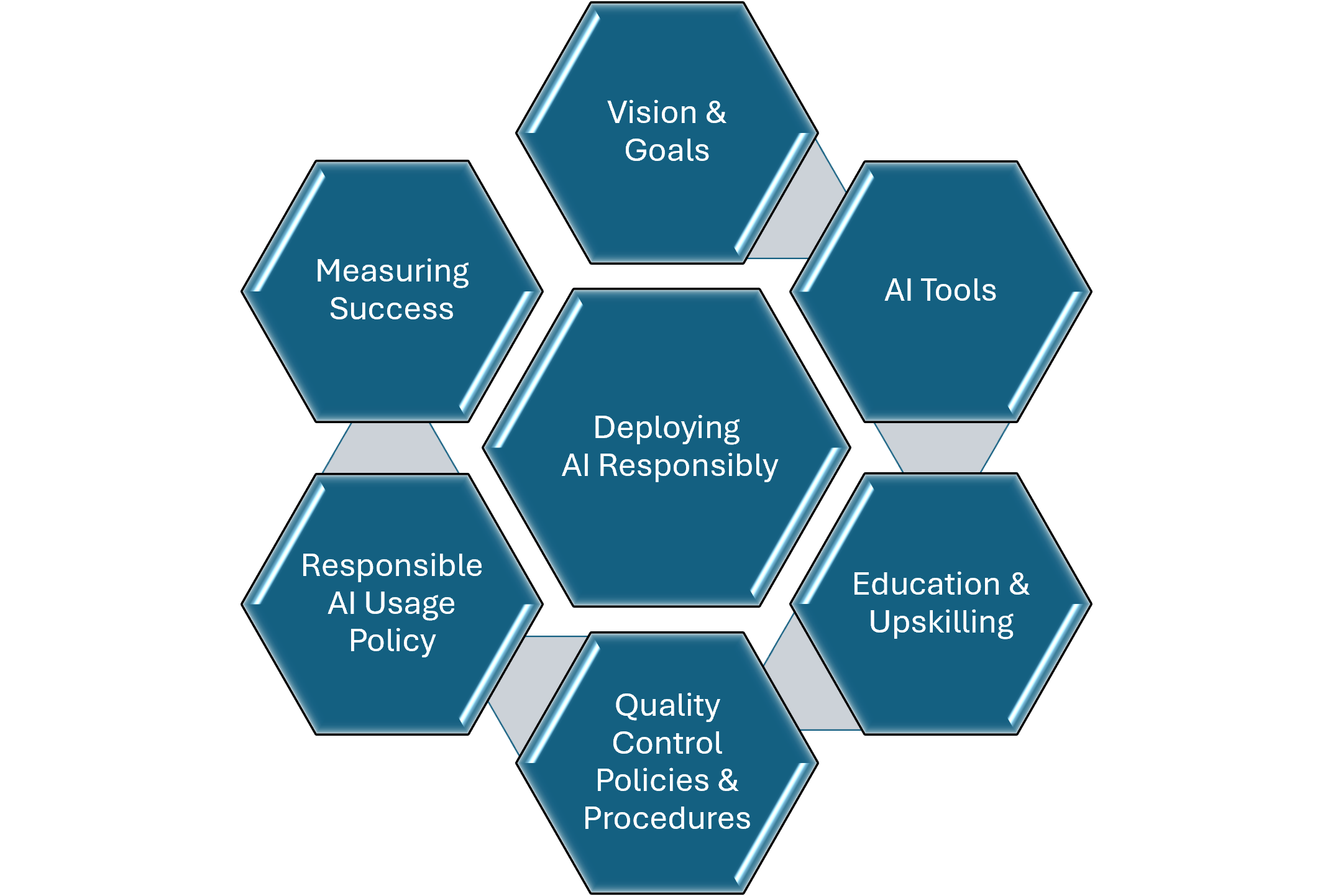
Here are six steps to responsible AI adoption in your firm:
1. Define Measurable Artificial Intelligence Goals
The first step is to establish what you hope to accomplish with the integration of AI into your firm. Drive labor effort out of workflows? Improve the quality of your work product? Offer new or enhanced services?
Answering these questions requires investing in some “thinking time” with your partner group, advisor, or even AI itself to help you understand the possibilities with AI and then establish the priorities you want to achieve. The more specifically you define these the easier it will be to stay focused on achieving them. Take case not to overcomplicate it.
2. Assign Accountable Artificial Intelligence Champions
We all have the challenge of finding time to devote to a new initiative while continuing to meet the demands of our daily work. Identifying champions who can take on specific roles in developing your artificial intelligence integration strategy will allow you to divide the workload and develop deeper expertise through specialization. For example, your tax services artificial intelligence champion can be assigned responsibility for identifying and initially screening tax services tools, learning how other firms are integrating artificial intelligence into their tax work, and identifying practical opportunities to apply AI in your firm’s tax services. These champions should be assigned specific objectives, clear decision rights, and an appropriate budget of time and funds to complete the mission. The more champions you can identify, the more progress your firm can make in a shorter timeline.
3. Evaluate Artificial Intelligence Tools with Discipline
The market supply of artificial intelligence applications for accounting, tax, and other firm services is expanding rapidly as application development becomes easier and faster. This creates friction because firms can fall into analysis paralysis while reviewing too many tools. Assigning a champion to each service area to investigate available artificial intelligence tools will significantly streamline the process and help the firm focus on practical business use cases.
A note about AI applications. I believe your goal should be to reduce the software tech stack in your firm. The evolution of AI software is bringing us single applications that have a broadening scope of automation. If I was the managing partner of a firm, I would set an audacious goal of having a single AI application that runs the entire firm’s operations within 10 years. This will require discipline to avoid taking on new software applications and instead applying the capabilities of AI available today to achieve the same or greater automations.
4. Educate and Upskill Your Team
We have never seen emerging technology with this much potential advance at such a rapid pace. It can be intimidating and stressful, which makes upskilling critical to the success of your firm’s artificial intelligence adoption. It is not practical to hire only artificial intelligence-savvy professionals because your firm also needs the domain knowledge your existing staff already holds. Therefore, artificial intelligence education should become a core initiative in your adoption roadmap.
5. Establish Quality-Control Policies and Procedures
There is abundant marketplace messaging about the risks of using artificial intelligence, including hallucinations, inaccurate information, data privacy leakage, data governance gaps, and related issues. Safe and responsible adoption requires effective policies and procedures for testing artificial intelligence-generated information for accuracy, relevance, and validity based on the specific engagement or workflow. Firm leaders should also define when and how the use of artificial intelligence technology should be disclosed in the creation of a work product.
One specific quality-control discipline to implement is a prompt management system for developing, approving, and periodically reviewing official technical prompts for defined tasks, such as analyzing executive compensation or lease agreements. Allowing everyone to develop their own prompts for technical applications creates inconsistent results and unnecessary professional risk.
6. Adopt a Responsible Artificial Intelligence Usage Policy
The optimal way to communicate and manage how your firm’s personnel is directed to utilize AI technology is through an “AI Usage Policy” document. This would encompass the policies and procedures discussed above, authorized AI tools they can use, professional education requirements around AI, privacy protection procedures and most importantly “acceptable use” guidelines. The policy needs to be a living document that is updated as new AI tools and applications emerge. The ramifications of violating the policy must be clearly communicated on a consistent basis to all staff. It should be emphasized that the usage policy is for the benefit of them and the firm to avoid potentially costly mistakes resulting in improper use of AI.
The implementation of artificial intelligence usage controls should be balanced with positive reinforcement about the benefits of safe and responsible use. The firm’s commitment to this technology and to upskilling team members should not be taken lightly. You are giving your people the opportunity to develop skills that will increase their relevance in a rapidly changing profession.
Measure Progress Against Firm-Level Outcomes
This AI adoption roadmap requires substantial investment and commitment on the part of the firm's leaders. Therefore, you need to have a methodology to measure success along the way. This ties back directly to setting your firm’s vision and goals for AI adoption.
Develop specific metrics to track your progress, such as net fees per employee, net fees per client, client retention, employee satisfaction, average hours worked, new service offerings, and net income. Whatever you do, avoid relying on billable hours as the primary measure of success because artificial intelligence should shift the firm’s focus toward value, leverage, and outcomes.
The key takeaway is that integrating artificial intelligence into your firm requires a deliberate strategic approach. Artificial intelligence is beginning to transform how professional services are delivered at an unprecedented pace. Remaining on the sidelines may weaken your firm’s competitiveness, talent strategy, and long-term relevance.
 | John H. HigginsJohn H. Higgins, CPA.CITP, is the founder of Higgins Advisory LLC, helping CPAs and CFOs navigate the rapidly evolving world of artifical intelligence and other emerging technologies. Learn more from John H. Higgins: |